Thatch Roof Maintenance: A Complete Guide for South African Homeowners
Regular maintenance is the key to a long-lasting thatch roof. This guide covers inspections, brushing, fire treatment, pest management, and when to call a professional.
By Walter at Project Master Thatching · 12+ years in the thatching industry
Why Thatch Roof Maintenance Matters
Your thatch roof is one of the most significant features of your property. Whether it covers your home, lodge, or lapa, regular maintenance protects your investment and ensures the roof performs as intended for decades. A well-maintained thatch roof can last 25 to 40 years, but neglect can cut that lifespan dramatically.
Maintenance is not just about appearance. It directly affects waterproofing, fire safety, structural integrity, and pest resistance. A proactive approach costs far less over time than reactive emergency repairs or premature re-thatching.
Annual Inspections
Every thatch roof should be professionally inspected at least once a year, ideally before the rainy season. An inspection covers the overall condition of the thatch surface, the state of the ridge and valleys, any signs of water penetration, and the condition of the underlying timber structure.
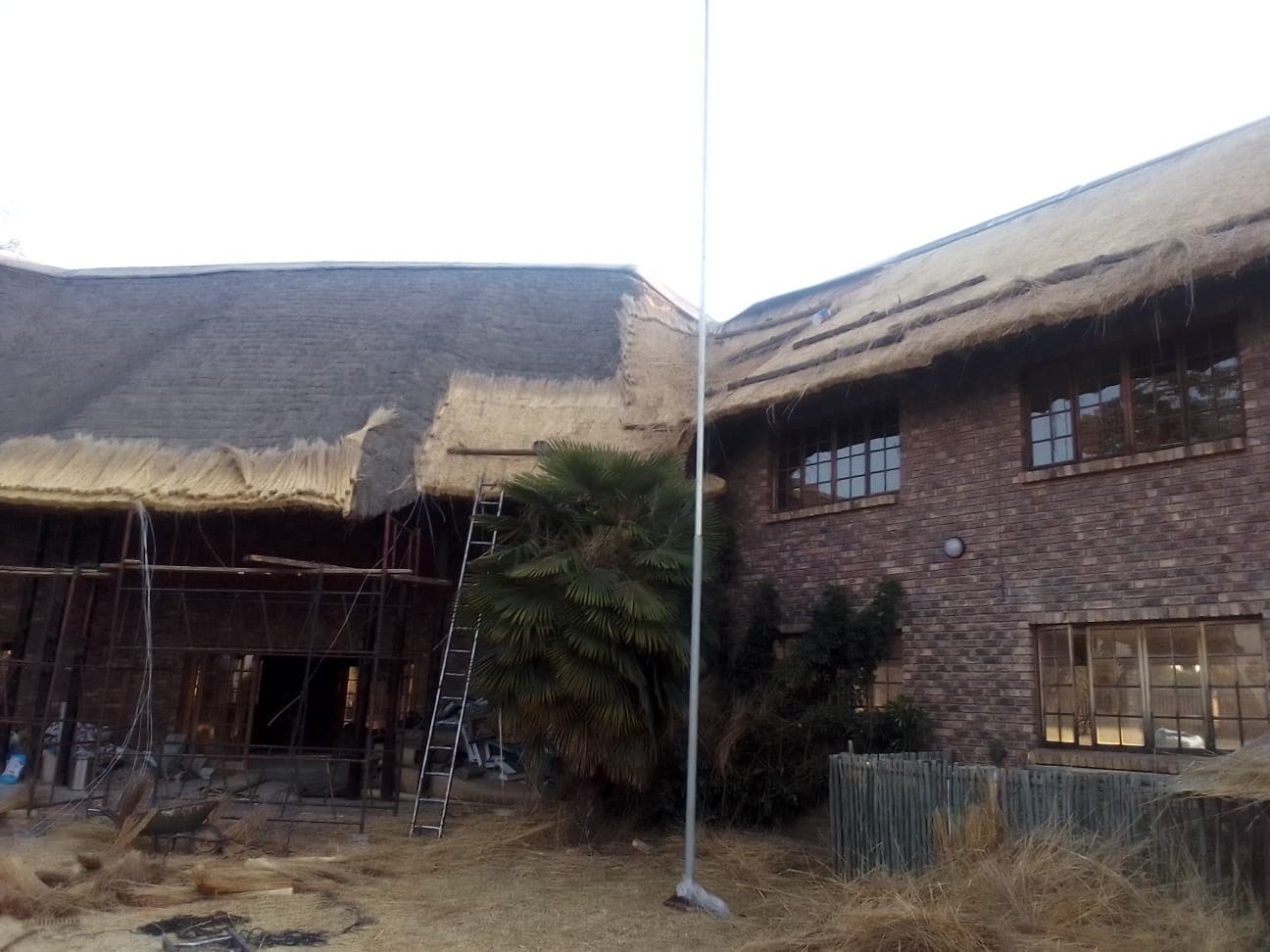
During an inspection, a qualified thatcher will look for thinning areas, bird or pest damage, loose or displaced thatch bundles, and signs of rot in the poles or battens. Early detection of these issues makes repair straightforward and prevents them from developing into major problems.
Brushing and Dressing
Over time, thatch roofs accumulate loose fibres, moss, lichen, and general debris on the surface. Professional brushing removes this build-up and restores the smooth, neat appearance of the roof. More importantly, it removes material that traps moisture against the thatch, which accelerates decay.
We recommend professional brushing every two to three years. The process uses specialised tools and techniques that clean the thatch surface without damaging the underlying layers. During brushing, the thatcher can also identify areas of wear, bird damage, or other issues that might not be visible from ground level.
Moss and lichen are particularly important to address. These organisms hold water against the reed surface, creating conditions for fungal growth and rot. Left unchecked, moss can cause localised decay that spreads over time.
Fire Retardant Treatment
Fire retardant treatment is a critical part of thatch roof maintenance and is often a requirement for insurance cover. Modern fire retardant products are tested to the standards specified in SANS 10407, the South African national standard for thatched roof construction.
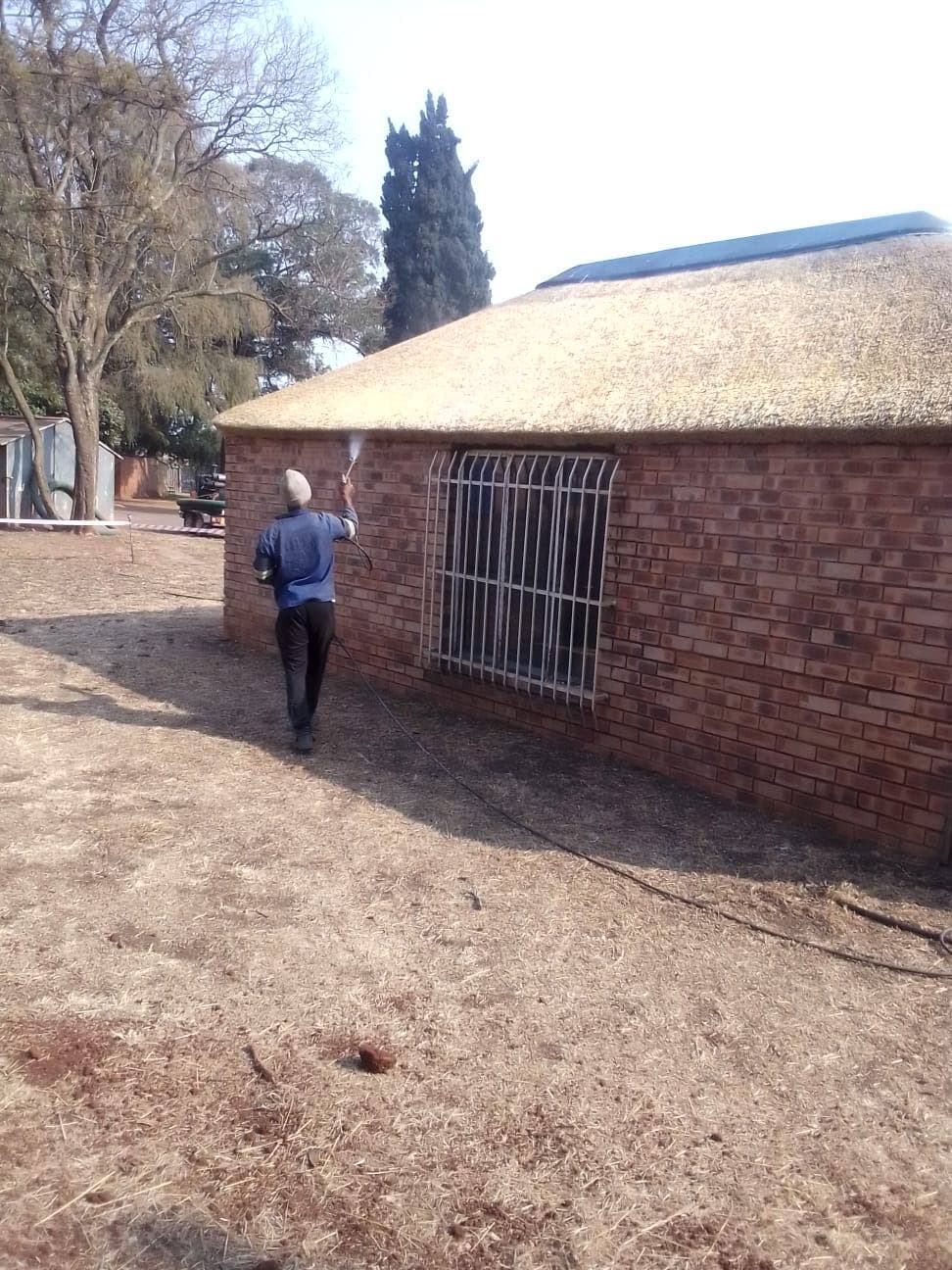
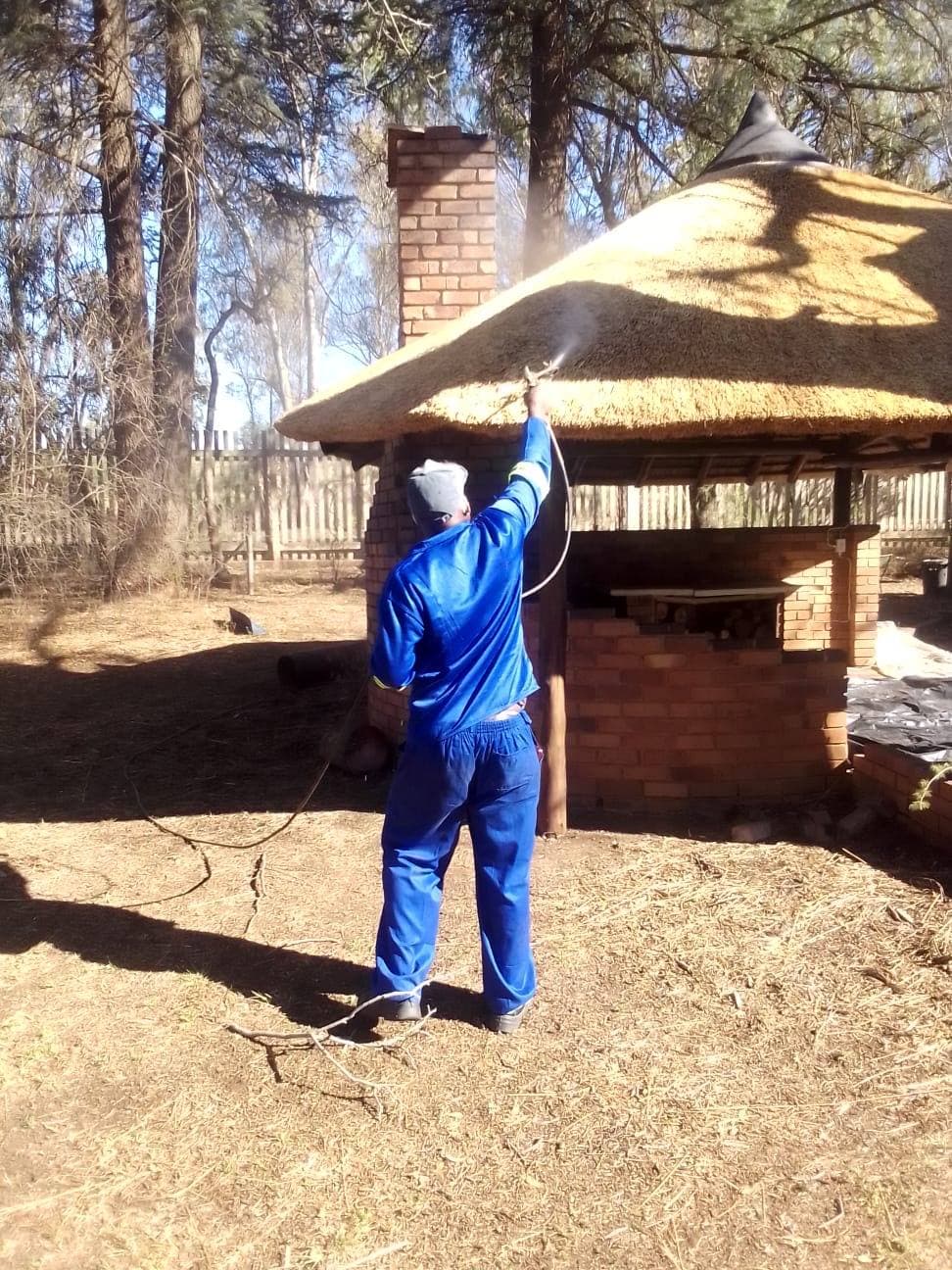
We recommend re-treatment every three to five years, depending on your location and the product used. The treatment is applied by spraying the roof surface, allowing the retardant to penetrate the outer layer of thatch. This significantly reduces the speed at which fire can spread across the roof surface.
It is important to use products that are approved and tested to recognised standards. Your thatcher should provide documentation of the product used and the date of application for your insurance records.
Common Issues to Watch For
Bird damage is one of the most frequent maintenance issues in South Africa. Hadedas, starlings, weavers, and other species pull at thatch to gather nesting material, creating thin spots and potential entry points for water. Hex-net wire mesh can be installed beneath or over the thatch to deter birds without affecting the appearance of the roof.
Leaks typically occur at vulnerable points: ridges, valleys, around chimneys, and where the roof meets walls or other structures. If you notice damp patches on ceilings after rain, it is important to have the source identified and repaired promptly before water damages the timber structure.
Pest infestations can include thatch lice, beetles, and dust mites. These are more common in older roofs and in areas with high humidity. Professional fumigation during installation helps prevent early infestations, and periodic treatment every few years keeps pest populations under control.
Wind damage, particularly lifting at the eaves or dislodging of thatch bundles, should be repaired as soon as possible. Exposed areas are vulnerable to further wind and rain damage, and small problems can escalate quickly during storms.
When to Call a Professional
While you can visually inspect your roof from ground level and keep gutters and surroundings clear, all physical work on a thatch roof should be carried out by experienced professionals. Thatch is a specialist roofing material, and incorrect repairs can cause more harm than good.
Call a professional thatcher if you notice leaks, visible thinning, sagging, bird damage, dislodged thatch, or if your fire retardant treatment is overdue. An experienced thatcher can assess whether a repair, partial re-thatch, or full re-thatch is the most appropriate solution.
Project Master Thatching offers comprehensive maintenance packages and prompt repair services across South Africa. Contact Walter for a free inspection and honest assessment of your roof's condition.
Need Help With Your Thatch Roof?
Contact Walter for a free inspection, maintenance quote, or expert advice on your thatching project.
More Articles
How Long Does a Thatch Roof Last?
A well-maintained thatch roof can last 25 to 40 years or more. Learn what affects your roof's lifespan and how to get the most out of your investment.
The Benefits of Thatch Roofing in South Africa
From natural insulation to environmental sustainability, thatch roofing offers unique advantages that conventional roofing materials cannot match.
Thatch Roof vs Tiles: Which Is Right for Your South African Home?
Comparing thatch roofing and tile roofing across cost, insulation, lifespan, maintenance, and aesthetics to help South African homeowners make an informed choice.
Lapa Ideas: Designing the Perfect Thatched Outdoor Space
Inspiration and practical guidance for planning a thatched lapa — from braai areas and poolside retreats to large entertainment pavilions, with 2026 cost guidance.
Cape Reed vs Thatching Grass: Choosing the Right Material
A practical comparison of Cape Reed and thatching grass — the two main thatching materials used in South Africa — covering lifespan, cost, appearance, and performance.
Thatch Roof Prices in South Africa: 2026 Cost Guide
What a thatch roof really costs in South Africa in 2026 — per-square-metre rates for new roofs, re-thatching, and maintenance, what drives the price, and how to compare quotes properly.
The Complete Re-Thatching Guide: When, Why, and What It Costs
How to tell whether your thatch roof needs a repair or a full re-thatch, what the re-thatching process involves step by step, how long it takes, and what it costs in 2026.
Thatch Roof Fire Safety: What South African Homeowners Need to Know
How modern fire retardant treatments, building standards, and lightning protection make thatched roofs a safe choice for South African homes.