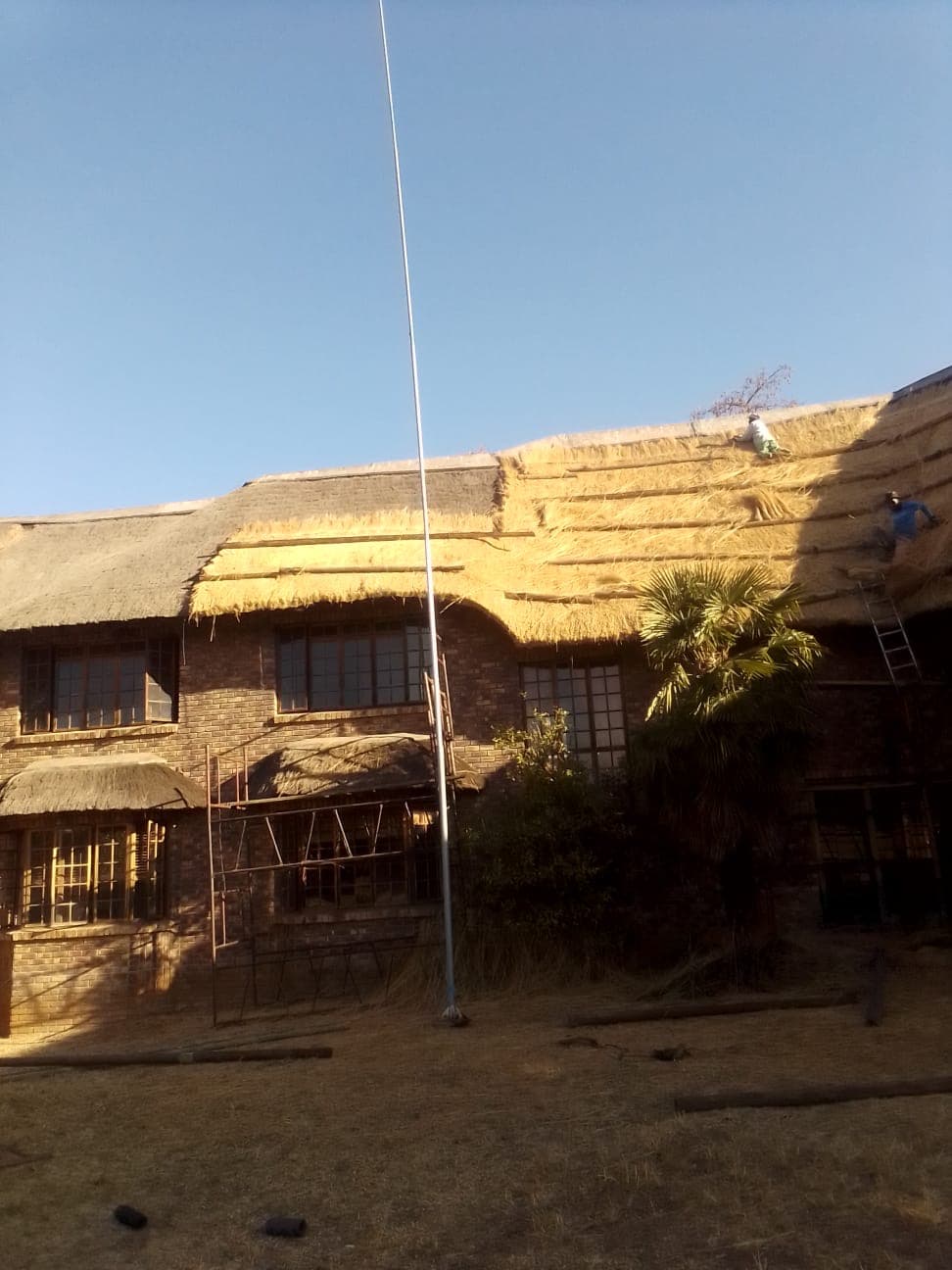
The Complete Re-Thatching Guide: When, Why, and What It Costs
How to tell whether your thatch roof needs a repair or a full re-thatch, what the re-thatching process involves step by step, how long it takes, and what it costs in 2026.
By Walter at Project Master Thatching · 12+ years in the thatching industry
What Is Re-Thatching?
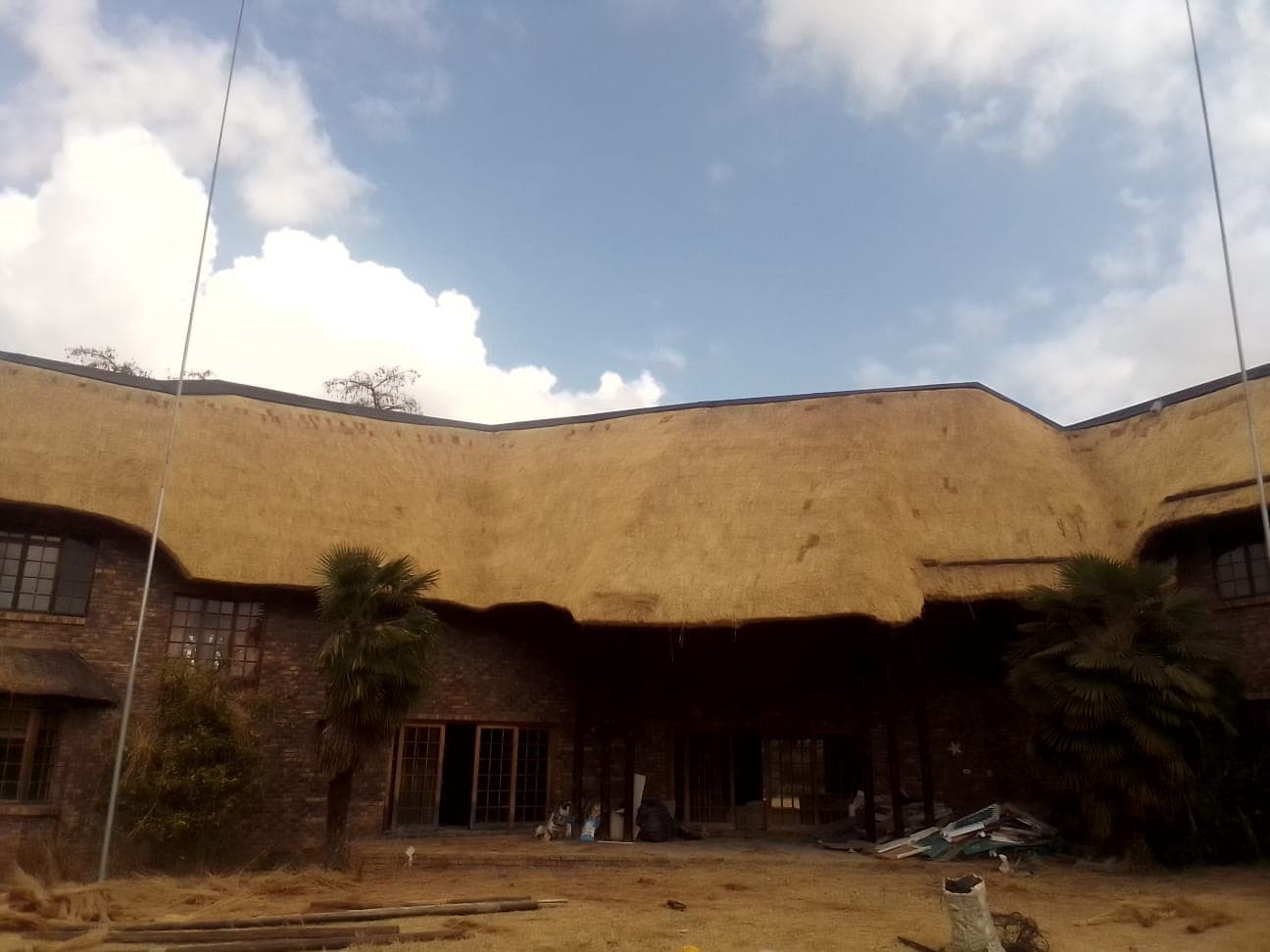
Re-thatching is the full renewal of a thatch roof's reed layer: the old, weathered thatch is stripped away, the timber structure underneath is inspected and repaired where needed, and fresh reed is applied at full density with a newly built ridge. Done properly, it restores the roof to as-new condition — waterproof, insulating, and good for another 25 to 40 years.
It is a different job from a repair, which addresses a specific problem — a leaking valley, a worn ridge, bird damage — while leaving the sound body of the roof in place. Knowing which one your roof actually needs is the single most important (and most expensive-if-wrong) decision in thatch ownership.
Repair or Re-Thatch? How to Tell
The state of the reed body is the deciding factor. Stand inside the roof space during daylight: if you can see pinpricks of light through the thatch, or the lattice is visible through a thinning layer, the body has worn down and a re-thatch is due. Repeated patching at this stage is money spent postponing the inevitable.
If the body of the roof is still thick — a healthy layer is around 300mm — and the problems are localised, repair is the right call. Ridges are the classic example: the ridge weathers two to three times faster than the roof body and is expected to be rebuilt several times during the roof's life. A washed-down ridge on a thick roof needs a ridge rebuild, not a re-thatch.
Other signals that favour re-thatching: widespread sagging (which suggests tired fixings or structural movement underneath), moss and lichen so established that brushing no longer removes it, persistent leaks appearing in new places after each rain, and thatch that crumbles rather than bends when handled. Age matters too — if a grass roof is past 15 years or a reed roof past 30 and showing several of these signs together, re-thatching is usually the economical path.
The honest test we apply on site: if the cost of the repairs your roof needs over the next three years approaches half the cost of a re-thatch, re-thatch. You get a new roof, a new compliance certificate, and decades of service instead of a cycle of call-outs.
The Re-Thatching Process, Step by Step
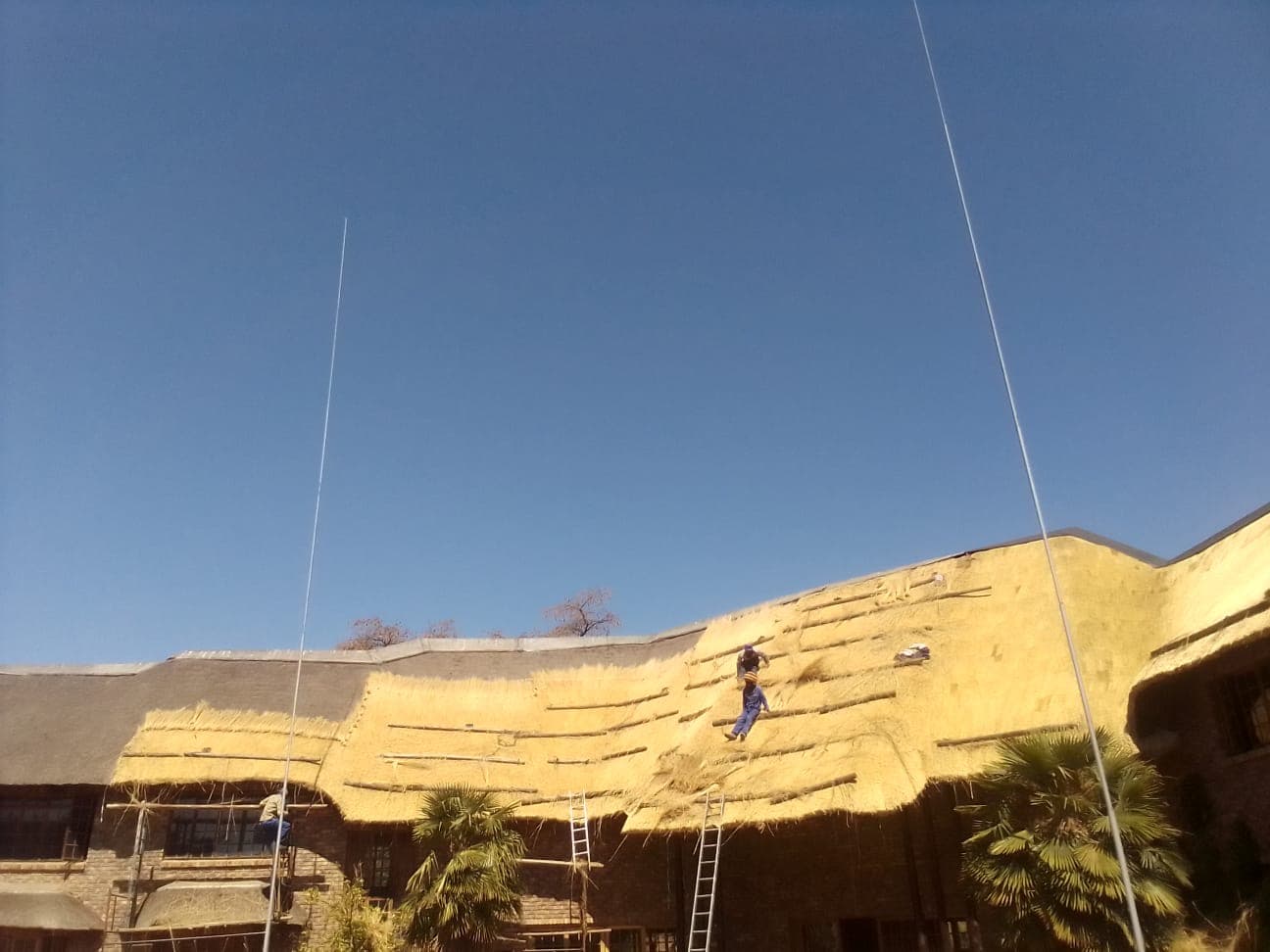
First, stripping: the old thatch is removed down to the timber lattice. This is the moment of truth for any thatch roof, because it exposes the structure that has been hidden for decades — battens, purlins, poles and fixings can all be properly assessed for the first time.
Second, structural inspection and repair: we check for rot, insect damage, rusted wire ties and tired fixings, and repair or replace timber before any new reed goes on. Skipping this step is how bad contractors re-thatch over problems that surface two years later. Any structural work is agreed with you before it happens — it is priced separately from the re-thatch rate precisely so it never hides in the quote.
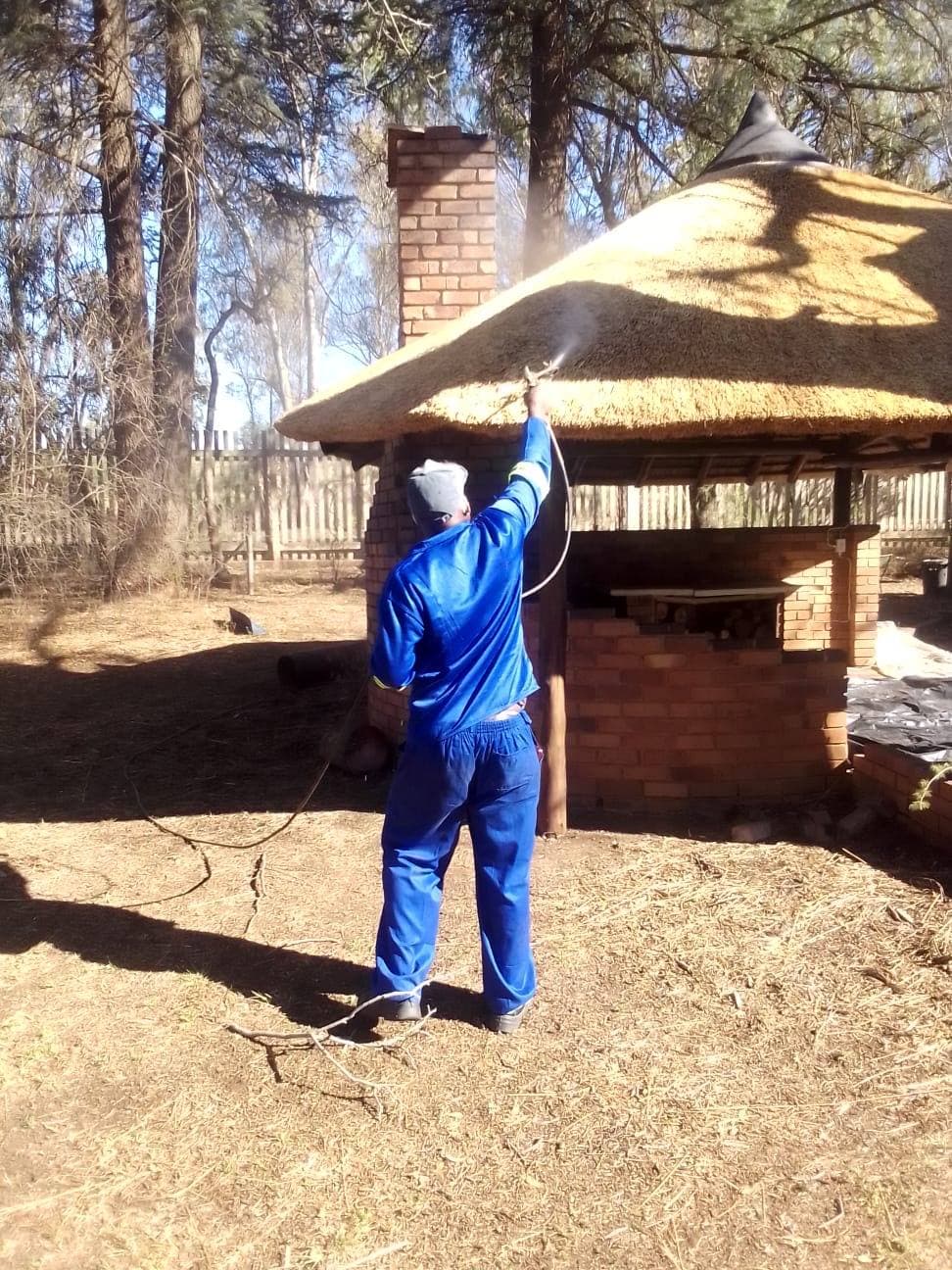
Third, thatching: fresh premium reed is laid and packed to full density, working up the roof plane by plane, with valleys and junctions built to shed water fast. Fourth, the ridge: rebuilt from scratch and compacted hard, because the ridge takes the worst of the sun and rain. Finally, fire retardant treatment to SANS 10407, with the compliance certificate your insurer will ask for.
How Much Does Re-Thatching Cost?
Our 2026 guide rate for re-thatching is R450 per square metre, supply and fix — stripping, fresh premium reed, ridge rebuild and fire treatment included. A 50 square metre lapa roof is therefore in the region of R22,500; a 250 square metre home around R112,500. Structural timber repairs, if the inspection finds any, are quoted separately once the roof is open.
Partial re-thatching is sometimes the right middle path: if one roof plane has weathered badly — typically the north-facing side, which takes the most sun in South Africa — while the rest is sound, re-thatching only the worn planes saves real money. We will tell you honestly whether your roof is a candidate.
For the full picture of thatching costs, including new roofs and ongoing maintenance rates, see our thatch roof prices guide among the articles below.
How Long It Takes and What to Expect
A typical residential re-thatch takes one to three weeks depending on roof size, complexity and weather. Lapa roofs are usually done inside a week. You can live in the house throughout — the roof is opened and closed in sections, and we plan the sequence so no part of the home stands exposed overnight.
Expect some noise, a team on scaffolding, and a surprising volume of old thatch coming off — which we remove from site. Weather is the one variable nobody controls: we do not strip more roof than we can close before rain, which is also why Highveld re-thatching runs smoothest in the dry winter months from May to September. Booking ahead of the season gets you better scheduling.
After the Re-Thatch: Compliance and Care
A completed re-thatch should hand you more than a new roof. You should receive a SANS 10407 fire-treatment certificate for your insurance file, and clarity on the maintenance rhythm that protects the investment: an annual inspection, brushing and dressing every two to three years, and fire retardant re-treatment every three to five years.
Check your lightning protection at the same time — SANS 62305-3 governs conductors and earthing for thatched buildings, and re-thatching is the natural moment to have the system verified, since most insurers require a valid certificate for thatched properties.
If your roof is showing its age, contact Walter at Project Master Thatching for a free assessment. We will tell you plainly whether it needs a repair, a partial re-thatch, or the full job — and quote exactly what we recommend, nothing more.
Need Help With Your Thatch Roof?
Contact Walter for a free inspection, maintenance quote, or expert advice on your thatching project.
More Articles
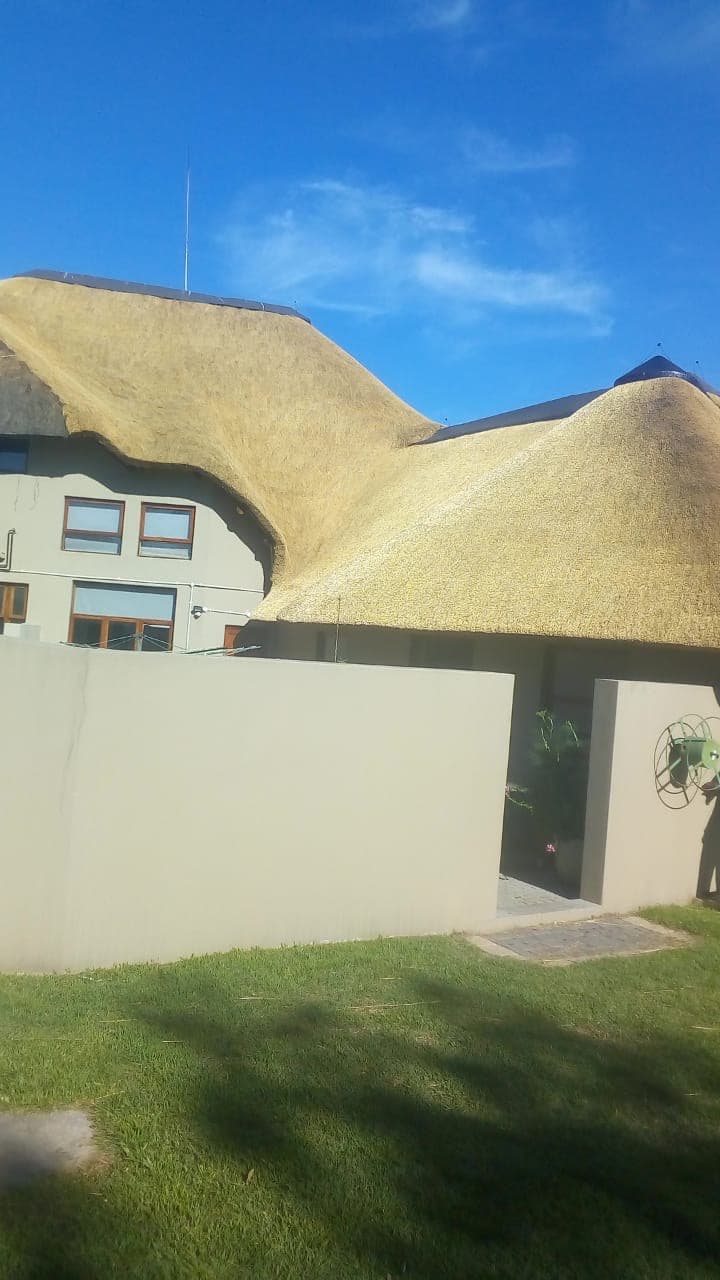
How Long Does a Thatch Roof Last?
A well-maintained thatch roof can last 25 to 40 years or more. Learn what affects your roof's lifespan and how to get the most out of your investment.
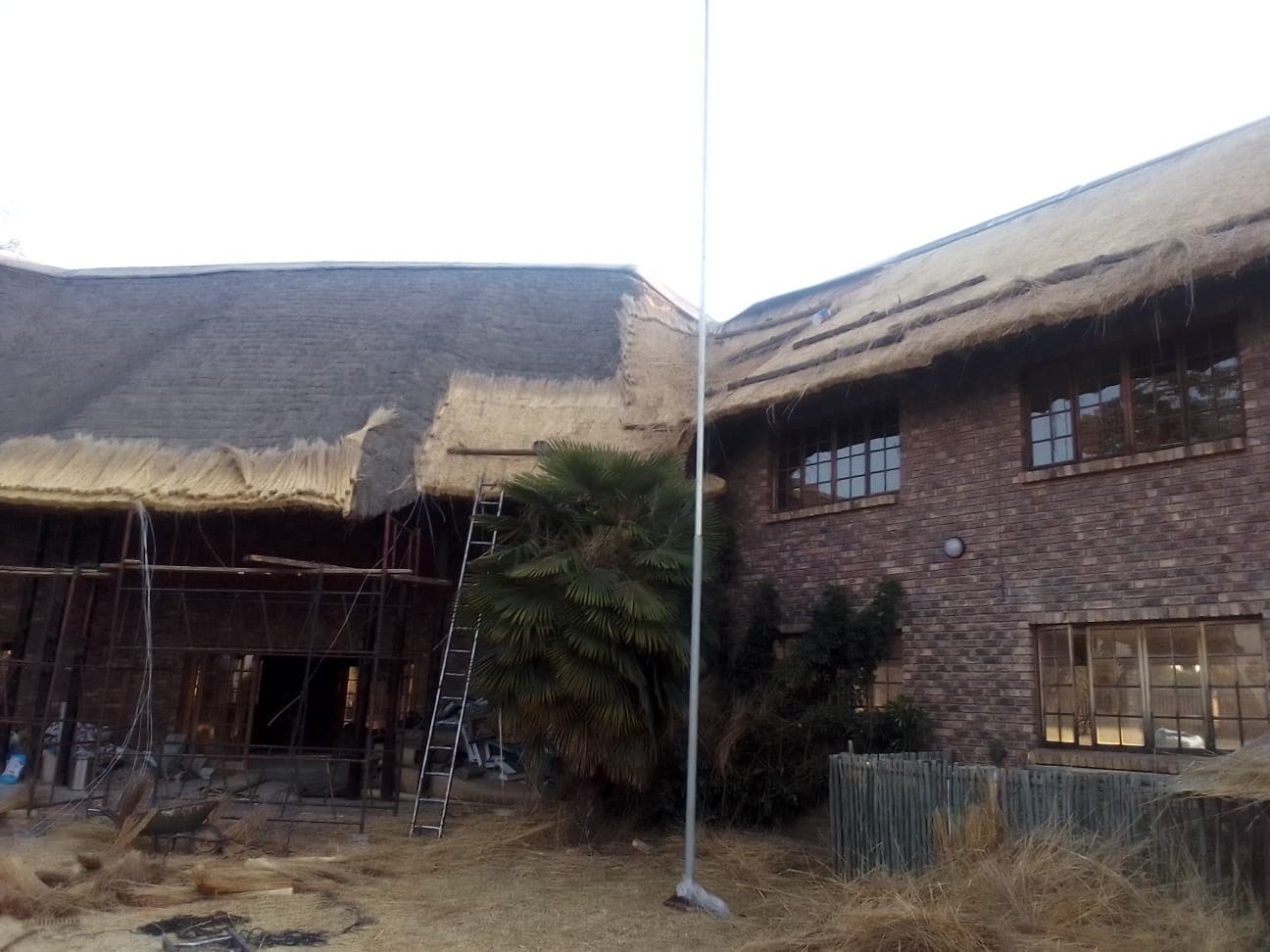
Thatch Roof Maintenance: A Complete Guide for South African Homeowners
Regular maintenance is the key to a long-lasting thatch roof. This guide covers inspections, brushing, fire treatment, pest management, and when to call a professional.
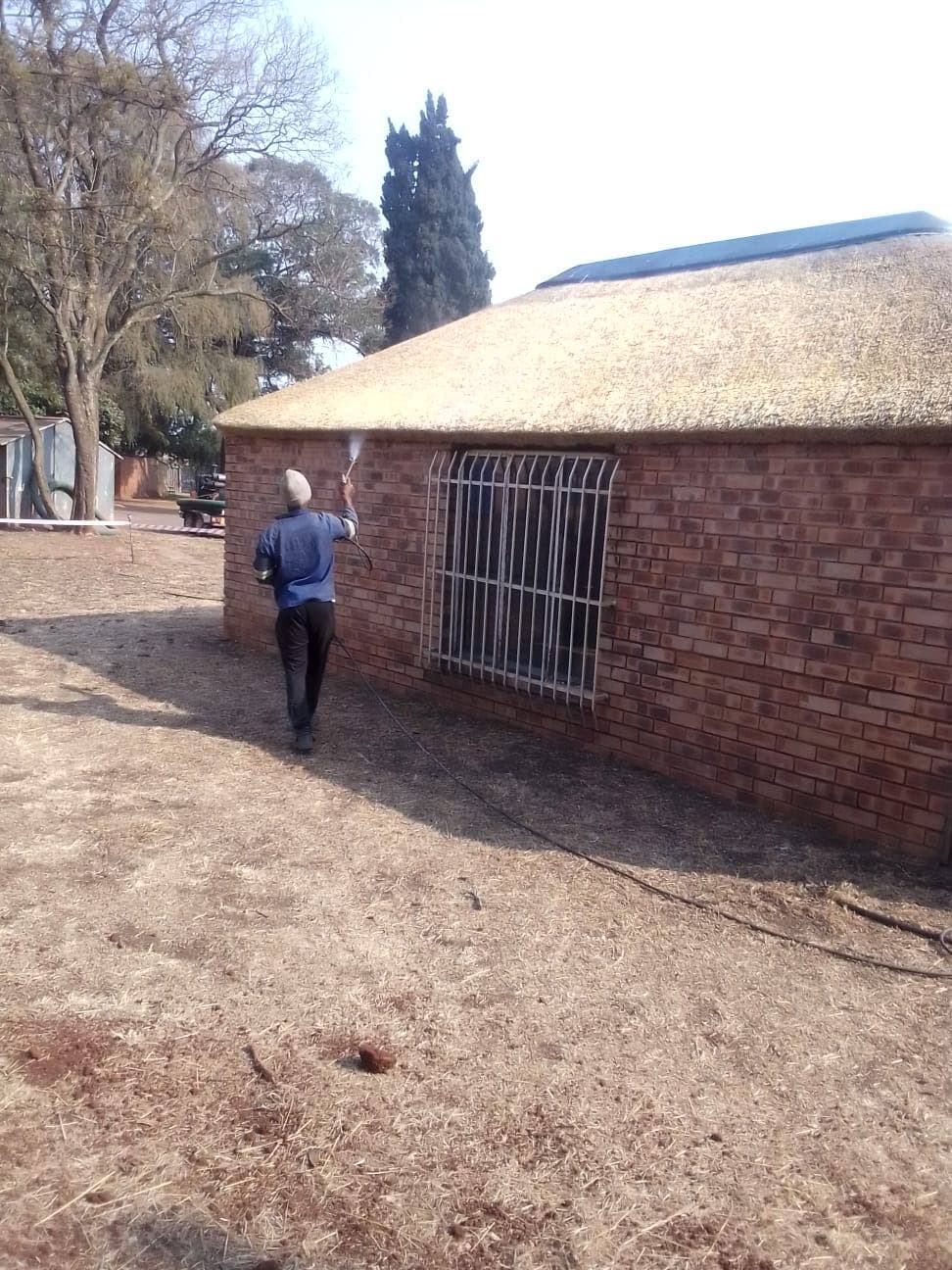
The Benefits of Thatch Roofing in South Africa
From natural insulation to environmental sustainability, thatch roofing offers unique advantages that conventional roofing materials cannot match.
Thatch Roof vs Tiles: Which Is Right for Your South African Home?
Comparing thatch roofing and tile roofing across cost, insulation, lifespan, maintenance, and aesthetics to help South African homeowners make an informed choice.
Lapa Ideas: Designing the Perfect Thatched Outdoor Space
Inspiration and practical guidance for planning a thatched lapa — from braai areas and poolside retreats to large entertainment pavilions, with 2026 cost guidance.
Cape Reed vs Thatching Grass: Choosing the Right Material
A practical comparison of Cape Reed and thatching grass — the two main thatching materials used in South Africa — covering lifespan, cost, appearance, and performance.
Thatch Roof Prices in South Africa: 2026 Cost Guide
What a thatch roof really costs in South Africa in 2026 — per-square-metre rates for new roofs, re-thatching, and maintenance, what drives the price, and how to compare quotes properly.
Thatch Roof Fire Safety: What South African Homeowners Need to Know
How modern fire retardant treatments, building standards, and lightning protection make thatched roofs a safe choice for South African homes.